

Proofline_1.svg
INNOVATION

Post-Moore Breakthrough: 2D Semiconductor Innovation Could Redefine Future Chip Technology

7,939 reads 5 comments
Post-Moore Breakthrough: 2D Semiconductor Innovation Could Redefine Future Chip Technology

As artificial intelligence workloads and large language models continue to surge, the semiconductor industry is approaching the physical limits of traditional silicon scaling. Long guided by Moore’s Law, chip development is now constrained by atomic-scale barriers, heat dissipation challenges, and fabrication complexity. In response, researchers are accelerating the search for next-generation materials, with two-dimensional semiconductors emerging as a leading candidate to extend computing performance while improving energy efficiency.

A key obstacle in 2D semiconductor development has been the difficulty of achieving stable and high-performance p-type materials, which are essential for modern transistor architectures. While n-type materials such as molybdenum disulfide have advanced significantly, the lack of complementary p-type counterparts has limited practical applications. Addressing this gap, a research team led by Zhu Mengjian, alongside Ren Wencai and Xu Chuan from the Institute of Metal Research, has developed a new method to enable better control over doping in 2D materials, paving the way for more balanced and efficient semiconductor systems.

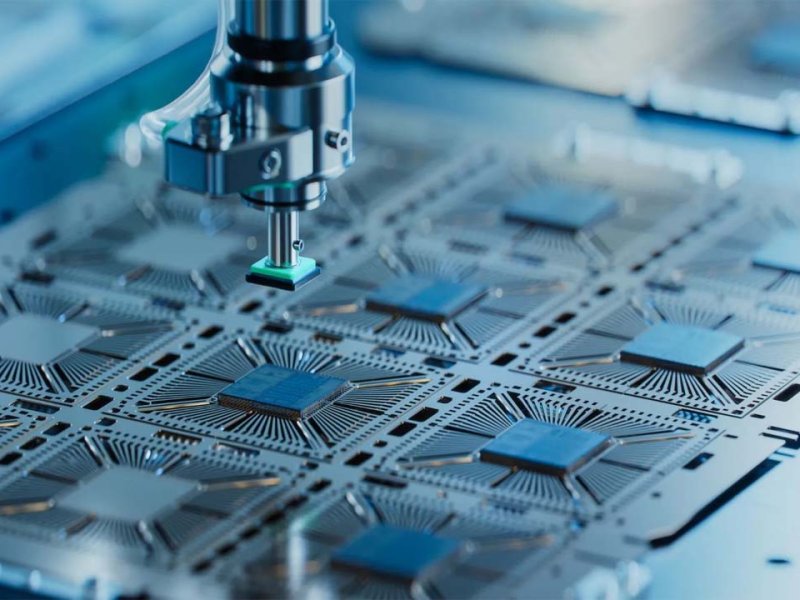
The team’s breakthrough centers on a redesigned chemical vapor deposition process that uses a liquid gold and tungsten bilayer substrate. This approach allows wafer-scale growth of monolayer tungsten silicon nitride with tunable electrical properties. Notably, the method accelerates production speeds by up to 1,000 times compared to previous techniques, while producing larger, high-quality single-crystal films. These materials exhibit strong hole mobility, improved heat dissipation, and chemical stability, making them highly suitable for next-generation transistor designs.

This advancement brings 2D semiconductors closer to real-world manufacturing and integration into CMOS architectures, a crucial step for future chip production. As the demand for more powerful and energy-efficient computing continues to rise, innovations like this could redefine the foundation of electronics, enabling faster, smaller, and more sustainable devices beyond the limits of conventional silicon.

Summary

Researchers have developed a new method to scale and improve 2D semiconductors, overcoming a major limitation in p-type material performance. By enabling faster production and better device integration, the breakthrough could help extend computing progress beyond Moore’s Law and power the next generation of AI-driven technologies.

Comments (5)

Kael

Semiconductor limits push search for new materials ⚙️

Lior

2D materials could extend chip performance 📊

Marek

Doping control improves semiconductor balance ⚡

Nero

Next-gen chips require new material innovation 🔬

Orin

Moore’s Law limits drive research breakthroughs 📉

Leave a Comment

Comments are reviewed before publishing.

0/300