
Proofline_1.svg
INNOVATION

New U.S. Bill Targets China’s AI Ambitions by Tightening Semiconductor Equipment Exports

4,105 reads 4 comments
New U.S. Bill Targets China’s AI Ambitions by Tightening Semiconductor Equipment Exports

A bipartisan group of U.S. lawmakers has introduced new legislation aimed at restricting China’s access to critical semiconductor manufacturing technology, a move that could reshape the global race for artificial intelligence dominance. The proposed Multilateral Alignment of Technology Controls on Hardware Act, led by Michael Baumgartner, seeks to close gaps in existing export controls by limiting the sale of advanced chipmaking equipment and related services. If enacted, the measure would expand current restrictions and encourage allied nations to adopt similar policies, strengthening a coordinated international approach.

The bill comes amid a surge in China’s imports of semiconductor manufacturing tools, driven by rising global demand for AI chips. Policymakers argue that these imports highlight vulnerabilities in current regulations, allowing China to continue advancing its domestic chip production capabilities. According to supporters of the legislation, tightening access to these technologies is essential to protecting U.S. economic interests, national security, and leadership in next-generation computing.

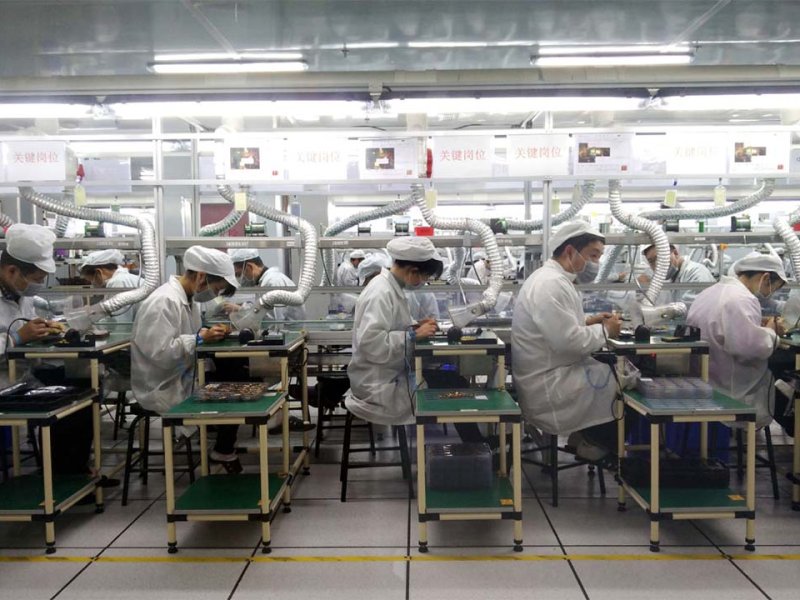
The initiative reflects a broader strategy by Washington to limit China’s progress in advanced technologies. Lawmakers such as John Moolenaar have emphasized the need for stronger safeguards, while similar efforts are expected in the Senate with backing from figures like Pete Ricketts and Andy Kim. Over the past several years, the United States has gradually tightened export rules on high-performance AI chips and related tools, though enforcement gaps have allowed certain lower-tier technologies to continue reaching Chinese firms.

At the center of this geopolitical and technological competition is the semiconductor supply chain, dominated by companies in the United States, Japan, and the Netherlands. Firms such as ASML play a crucial role, particularly in lithography systems required to produce advanced chips. While restrictions already block China from acquiring the most advanced extreme ultraviolet machines, it has continued to access less advanced equipment, enabling progress in domestic chip production. Meanwhile, Chinese leadership, including Xi Jinping, has repeatedly called for self-reliance in semiconductor technology, underscoring the strategic importance of the sector.

Summary

The proposed legislation signals a significant escalation in efforts to curb China’s technological advancement in artificial intelligence by restricting access to semiconductor manufacturing equipment. Backed by bipartisan support, the bill highlights the growing importance of global cooperation in regulating critical technologies and maintaining a competitive edge in the rapidly evolving AI landscape.

Comments (4)

Viktor

This semiconductor restriction shows how AI leadership is becoming a geopolitical weapon ⚙️. Controlling chipmaking tools could slow China, but it may also accelerate domestic innovation efforts.

Elena

ASML and similar companies are now at the center of global power struggles 🌍. Without advanced lithography machines, AI chip production becomes almost impossible at scale.

Arman

The US strategy of tightening export controls could reshape the entire AI supply chain 🚀. But over-restriction might push China to fully independent semiconductor breakthroughs.

Kenji

Semiconductor dominance is basically the backbone of AI supremacy 🤖. Whoever controls chip manufacturing equipment controls the speed of future technological development.

Leave a Comment

Comments are reviewed before publishing.

0/300