
Proofline_1.svg
INNOVATION

MIT Breakthrough: New Quantum Sensor Measures Multiple Parameters at Once

7,076 reads 5 comments
MIT Breakthrough: New Quantum Sensor Measures Multiple Parameters at Once

Researchers at Massachusetts Institute of Technology have developed a next-generation quantum sensor capable of measuring multiple physical parameters simultaneously, marking a significant leap in sensing technology. Unlike traditional quantum sensors that capture only one variable at a time, this new approach enables scientists to observe complex systems more efficiently. The innovation could transform how researchers study atomic behavior, electronic interactions, and even biological processes, offering deeper insights into both materials science and living systems.

Quantum sensors are already known for their extraordinary sensitivity, using principles like entanglement and superposition to detect minute changes in magnetic fields, temperature, and other forces. What makes them especially practical is their ability to operate at room temperature, unlike many quantum technologies that require extreme cooling. However, their limitation to single-parameter measurement has long slowed down experiments and reduced accuracy. The MIT team’s breakthrough addresses this bottleneck, allowing faster and more reliable data collection.
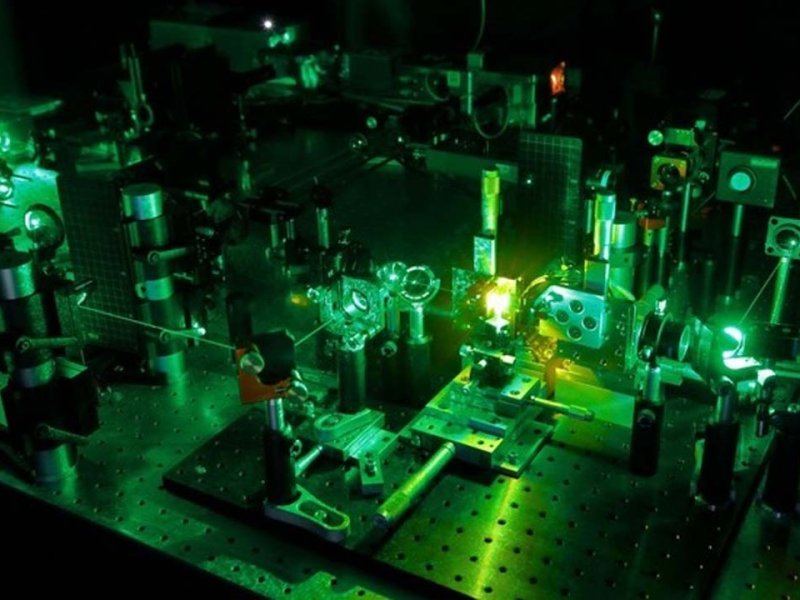

At the core of this innovation is the use of nitrogen-vacancy centers in diamonds, a well-established quantum sensing platform. By combining optical, microwave, and radio-frequency techniques, researchers were able to access multiple quantum states at once. Using a method known as Bell-state measurement, they entangled two qubits, enabling the system to measure three parameters simultaneously, including amplitude, phase, and frequency detuning of a magnetic field. This multi-qubit approach significantly enhances the sensor’s versatility and opens the door to measuring other variables such as pressure, electric fields, and strain.

While the current system still faces challenges in achieving higher precision, researchers are optimistic about its future applications. The technology could play a crucial role in studying complex and heterogeneous materials, advancing fields like condensed matter physics and biomedical research. By overcoming previous limitations, this breakthrough positions quantum sensing as a powerful tool for next-generation innovation, bridging the gap between theoretical quantum science and real-world applications.

Summary

MIT researchers have introduced a new quantum sensor that can measure multiple parameters at once, overcoming a key limitation of existing technologies. By leveraging entangled qubits and advanced measurement techniques, the system improves efficiency and expands potential applications in science and medicine. Although further refinement is needed, this development marks a major step forward in practical quantum sensing and innovation.

Comments (5)

Leif

Quantum sensors now measure multiple variables simultaneously 🔬

Magnus

Breakthrough improves accuracy and speed of experiments ⚛️

Nikolai

Room temperature operation makes tech more practical 🌡️

Oberon

Multi-parameter sensing expands research capabilities 📊

Phineas

Quantum innovation could impact biology and materials science 🧪

Leave a Comment

Comments are reviewed before publishing.

0/300