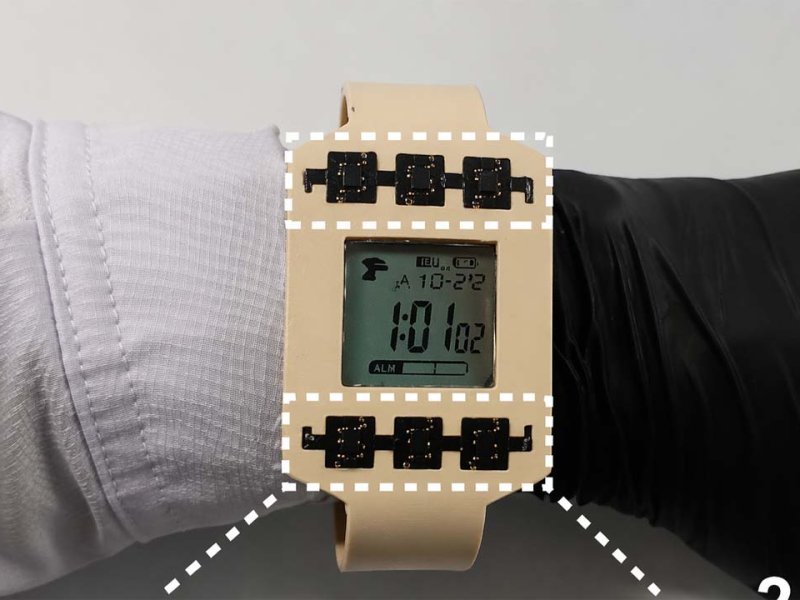
Researchers led by Dong-Dong Han at Jilin University have introduced a novel technique that transforms natural leather into energy-storing electronic devices. Using a CO2 laser, the team directly writes conductive patterns onto vegetable-tanned leather, converting its surface into a carbon-based structure capable of storing and regulating electrical energy. The result is a встроенный microsupercapacitor that merges seamlessly with soft, wearable materials, offering a sustainable alternative to traditional electronics manufacturing.
This innovation addresses key limitations in wearable technology, particularly the reliance on rigid batteries and complex chemical processes. By leveraging Microsupercapacitor technology, the method enables rapid charging and discharging while stabilizing electrical signals. The laser-induced carbon layer forms a porous network that increases surface area, enhancing energy storage efficiency without the need for synthetic substrates or multi-step fabrication.